 Speak to a HiFi Guide • 1-888-326-7490 • Mon-Fri • 8am to 5pm MDT

Standalone Streamers & Music Servers: Digital Done Right
Some drivers on the road like a bit of zip in their ride. The popularity of Ford’s twin-turbo V6 Raptor truck shows how lifestyle and comfort are juiced with extra performance, making it a big seller. Even reasonable cars, trucks, and SUVs these days offer a bit of “oomph” behind the gas (or non-gas) pedal, with Tesla's rapid-acceleration electrics leading the way.
Stoking the need for speed within the paradigm of a multi-purpose vehicle's usefulness, for me, draws a perfect parallel to the concept in HiFi audio of “separates” versus integrated components.
Can a Raptor beat a V12 Lamborghini off the line? Definitely not, but it’s not designed to do so. There’s a place for quick and helpful vehicles in a garage, just like there is a place for the convenience of combining components in a HiFi system.
But what if ultimate performance is the goal instead of simplicity? Separating those components would then be the mission, as digital sources like the DAC and the streamer can improve with their own dedicated circuits, chassis, and power supplies.
The topic of power supplies should come up a lot for the audiophile seriously investigating high-performance streaming digital audio and wondering how good it can get. Purpose-built, pure digital streamers and servers, at least the ones in this list, have had lavish attention paid to their power sections, with more specialized regulation and lower noise as you move up in price.
It doesn’t stop with better DC power; state-of-the-art streaming devices isolate inputs, cache files for SSD playback, and optimize their software for the best sound. Those components with CD-ripping drives and storage perform this task uncompromisingly and with bit-perfectness.
Audiophiles looking for the best that modern high-resolution streaming offers have plenty of options, such as those in this list from TMR’s new products catalog.
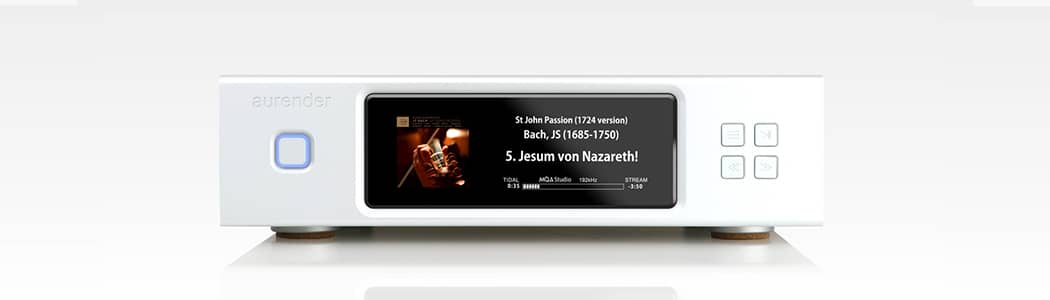
The Aurender N200 is perhaps the best all-around streaming product that Aurender offers. It’s graced with the same power supply and digital clocking DNA of the top-tier Aurender products, but it’s slimmer and sleeker. It’s got space for two storage drives and can act as a server, or it can operate and stream entirely on a super-fast SSD. Its impressive display can be put to sleep in “Critical Listening Mode” for the ultimate in low-CPU, low-noise streaming digital playback.
Top-end digital-only streamers like Aurender's N20 take these philosophies to the highest level, but at $6K, the N200 is the point where the magic really starts to happen. Lack of Roon integration may seem like a downside at first, but Aurender’s own Conductor app is a joy to use. It offers further sonic optimization than the well-known Roon can boast, caching entire songs for playback from a more stable, lower-noise onboard SSD. Aurender is the discriminating choice for an all-in streaming approach.

Again, Canadian company Bluesound offers a terrific entry point for streaming local files alongside internet-based ones with the Bluesound Vault 2i server and streamer. The integrated CD ripper allows the audiophile to transition fully into the streaming world. The BluOS app connects with a laundry list of cloud streaming services, and the Vault even works with Control4, Crestron, and other home integration products. The onboard 2TB is enough space to hold an impressive library, and advanced voice control via popular home internet-connected speakers like Amazon’s Alexa or Apple’s Siri feels like icing on the cake. Get a Vault and add as many Nodes or PowerNodes as you want for epic, multi-room, voice-controlled audio.
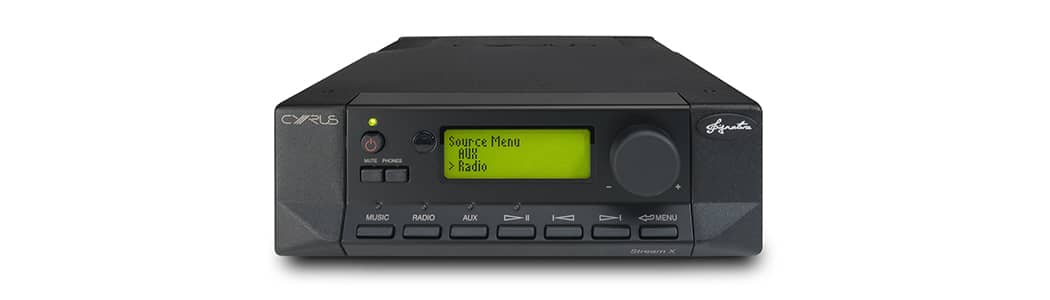
Cyrus’ pure digital, purpose-built streaming transport easily outperforms the brand’s other all-in-one or combination products, at least for streaming. Housed in the same alluring chassis and motif that Cyrus fans crave, the diminutive Stream X Signature connects with Tidal and Qobuz. It uses proprietary software called Cadence, though BubbleUpNp fans can also use their preferred software. Cyrus’ Stream X Signature represents serious streaming at a budget-friendly price.
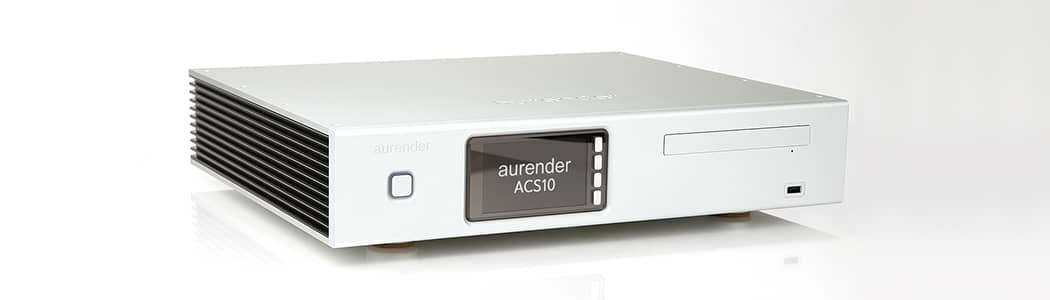
Like Bluesound’s Vault, Aurender engineers sought to offer solutions for the audiophile with an extensive physical library and a goal of reducing it. The ACS line of products will rip, serve, and stream as a one-stop solution. The onboard CD drive on the Aurender ACS10 is worth mentioning: it’s the same TEAC drive that high-end brand Esoteric uses, and it’s quiet and powerful. The fine treatment of bits doesn’t end there, as files are ripped using “bit-perfect” software that checks and rechecks the accuracy of the files before and after transfer to ensure they’re 100% error-free.
The rest of the unit carries the same intense attention devoted to essential hardware components that make Aurender streamers and servers famous in the HiFi community. Double-isolated jacks, precise clocks, and solid-state caching are mated with larger drives and expanded storage capability. Also like the Vault, the ACS10 can serve as a “hub” and connect with other Aurenders on the network for a simple multi-room experience.
Price: $6,000
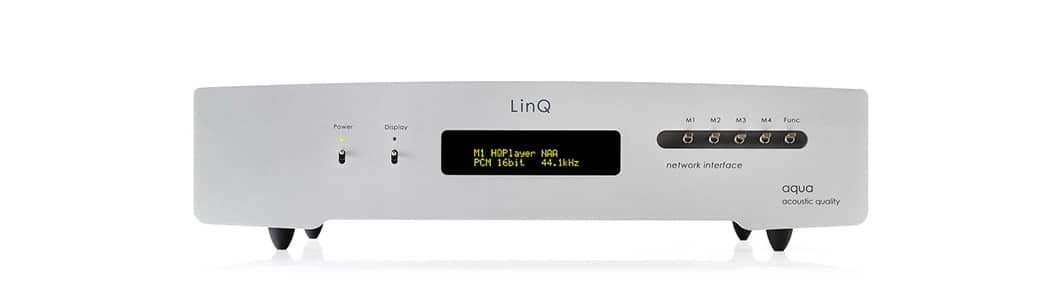
When Aqua designs a DAC or Streamer, the Italian company tends to go all-out. Our exclusive review of the La Scala Mk II “Optologic” DAC showed what’s possible when you combine four state-of-the-art topologies (tubes, FPGA, resistor ladder, FET output) into one purpose-built performance machine. The LinQ is no different and adds an extra layer of transparency and resolution when connected to the Aqua DAC. The AQlink connection scheme allows the LinQ streamer to send files via I2S, a more advanced version of S/PDIF. This connection is as low-jitter and low-noise as they come.
The LinQ streamer from Aqua offers a lot of flexibility and can be configured as a Roon core itself or as an endpoint. Further flexibility comes from its optional integration with HQPlayer and, if desired, the NAA transfer protocol. Once dialed into your setup, the well-reviewed LinQ streamer will shine as a statement streaming source in a high-end digital system. The LinQ is now also offered in a Roon Ready configuration.
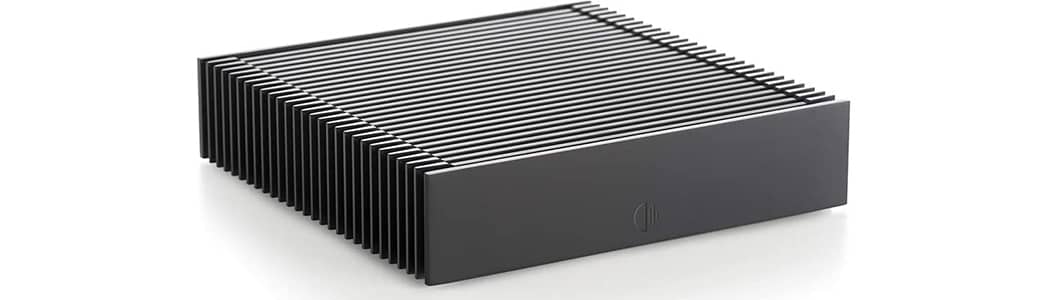
Roon can run on any product that is certified Roon Ready or Roon Tested, like the LinQ from Aqua. But for the setup to work, there must first be a “core” to host the Roon program and serve music to the endpoint players. Any Apple computer or Windows PC can run Roon, and even Linux-based NAS servers can handle the job. But for the best performance and ease of use, Roon offers its own Linux-based Roon cores called the Nucleus.
A new multi-zone version called the Whirlwind has just been released, which includes analog outputs. In general, the Roon devices have been focused on passing a digital stream to other players on the network. The Nucleus+ has more storage than the standard version, but they both offer expansion slots for adding extra drives.
Hear More. Learn More. Love Your System More.
Join thousands of music lovers who get weekly guides, expert insights, and exclusive offers from The Music Room.