 Speak to a HiFi Guide • 1-888-326-7490 • Mon-Fri • 8am to 5pm MDT

QLN Signature 3 Review — Trapezoid Design, Golden Ratio Acoustics, and Bookshelf Speaker Excellence
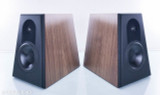
QLN Signature 3 Bookshelf Speakers; Walnut Pair
One of the best hifi forum pejoratives I've seen is the term “cone-and-dome monkey coffin,” used to denigrate a standard mini-monitor-type speaker design.
If you’re presently looking at a set of these, as I am, you can try to imagine an old monkey who lived a long and happy life, laid to rest by his monkey descendants and lowered into the earth entombed in an adorable, BBC-licensed, LS3/5a cabinet.
Why is a BBC monitor shaped the way it is? Why are these mini QLN monitors shaped like a trapezoid instead? Did the BBC scientists miss something that QLN did not?
I’ve noticed waves of unique looks, each of which seems to concern a group of companies for a period of time throughout the history of audio. First, you had Electro Voice and the giant cabinets like the fridge-sized Patrician dominating homes. Years later, Klipsch popularized the corner horn approach, and by the end of that trend, Klipsch had some healthy competition in the corner-speaker game.
In the ‘70s, you had the East Coast Sound and the Western counterpart. The east coasters all looked the same (sealed, big woofers and dampened paper domes), as did the west coast speakers (horn on top, PA woofer below).
There was a brief era of mega line arrays, ALA Beveridge, Genesis, Infinity, McIntosh, and others (McIntosh is still at it).
Then there was the BBC monitor craze. And the monkeys rejoiced.
More recently, there’s been this “trapezoid on top / tall bass reflex bin on the bottom” kind of thing that describes Watt/Puppy and Genesis V and quite a few others.
Where was I going with this?
There are particular reasons each of those speaker designs looks the way it does. The BBC Monkey coffins are small enough to hold a monkey because they’re focused on midrange clarity and transparency, so they utilize a small midbass woofer. And the small midbass woofer needs a small monkey coffin-amount of air behind it to correctly pressurize the cone.
The actual dimensions of the box follow a “golden ratio” that minimizes the ability of the parallel opposing sides to form internal sound-ruining standing waves. The golden ratio works well, but other approaches work a tad better, like this one from QLN.
Looking at these beautiful cabinets, we can see that the only parallel walls are the top and the bottom, and if I had to guess, I’d say the perfect spot for a cross brace inside would also be ideal for diffusing that tiny standing wave. Even without a brace, the front slope puts the driver's baskets in the way of diffusing the wave, and the intrusion of the port from the back does the same.
Further, the trapezoid allows for a taper, bottom-to-top, meaning the front baffle is not much wider than each driver. This, as you might know, is fantastic for supporting a vibrant stereo image. Lastly, a reclined front baffle actually vertically aligns the centers of each driver’s motors. As they receive the same music at the same time, they launch their waves together, resulting in improved coherence.
Well-designed speakers deliver refined sound. As you explore the various approaches to discover your preferences, try to dig into the “whys” of the design and see what resonates with you.
These QLN cabinets may be inert due to their constrained-layer construction, but they resonate with me. How’s that for an audiophile joke?