 Speak to a HiFi Guide • 1-888-326-7490 • Mon-Fri • 8am to 5pm MST

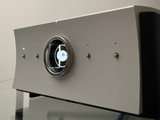
Mola Mola Lupe Archival Phono Stage Review and Overview
Why Phono Stages Still Matter, Maybe More Than Ever
Vinyl has never offered more choice. More turntables, more cartridges, more reissues, more boutique pressings. But with that abundance comes a challenge: modern analog systems can achieve far greater resolution than many phono stages are prepared to handle.
A cartridge doesn’t need help sounding interesting, that's not the goal of a cartridge, or phono pre-amp for that matter. It needs help sounding accurate. That’s where the phono stage quietly becomes one of the most influential components in the system.
The best phono stages will not add character or soften edges, as the overused term "warm" implies. They lower the noise floor, stabilize gain, preserve timing, and allow the cartridge to behave predictably. When that happens, records feel less like “vinyl playback” and more like performances unfolding naturally.
That’s the context in which the Mola Mola Lupe makes sense.
Where the Mola Mola Lupe Fits in the Analog Conversation
As with all Mola Mola gear to date, the Lupe is unapologetically modern. It doesn’t chase nostalgia, tube glow, or vintage voicing. Instead, it approaches analog playback with the same discipline Mola Mola applies to digital and amplification: reduce noise, control variables, and remove friction between the source and the rest of the system.
It sits firmly in the reference-grade category, not because it sounds spectacular on first listen, but because it remains consistent across cartridges, records, and long listening sessions. The Lupe is about repeatability and truth, qualities that matter more the deeper you go into vinyl.
This makes it especially relevant in systems where analog is treated as a serious primary source.
What Is the Mola Mola Lupe?
At its core, the Lupe is a fully balanced, ultra-low-noise phono stage designed to accommodate a wide range of cartridges with extreme precision. Every element of its design focuses on stability: gain accuracy, loading consistency, and noise control.
Rather than offering a fixed “house sound,” the Lupe provides tools, granular gain settings, flexible impedance options, and memory presets, that allow the phono stage to disappear once properly configured.
Think of it less as a tone-shaping component and more as an interface between the cartridge and the system. Its job is to translate the cartridge’s output faithfully and predictably, without adding interpretation.
Real-World Listening Impressions
Specs and design intent only tell part of the story. What ultimately matters is how a phono stage behaves once it’s dropped into a real system, in a real room, with real listening habits. To get that perspective, I spoke with my friend and colleague David Pew, who has been living with the Mola Mola Lupe in his reference system for about a year and a half.
What system did you drop the Mola Mola Lupe into?
David: I’ve had the Lupe for about a year and a half. It went into my reference system, but there have been a couple variations. When it first went in, I was running it into a Benchmark HPA4 as the preamp, then out to a McIntosh power amplifier, and into Focal speakers. Since then, I’ve gone deeper into the Mola Mola ecosystem — I added the Mola Mola preamp as well — and that really brought out what the Lupe does well.
What stood out first when you started listening?
David: The first thing that hit me was the soundstage separation. That’s the Mola “house sound” I fell in love with. With layered instruments especially, everything has a defined place in the stage. You can hear each element clearly separated, but it still stays musically cohesive.
How would you describe the Lupe’s strengths in terms of soundstage and separation?
David: It’s really incredible with layered presentations. It gives you a strong stage to begin with, then it separates everything out within that space, but the music still hangs together. You’re not just hearing “parts,” you’re hearing the performance as a whole.
What turntable and cartridge are you currently using with the Lupe?
David: I’m using a Mark Levinson 5105 turntable with a Hana Umami Blue cartridge.
Did the Lupe change how you approached cartridge setup or adjustment?
David: Yes. The cartridge has actually been through three variations since I got the Lupe. I started with an entry cartridge, upgraded quickly to a Hana ML, and after an unfortunate stylus incident, I moved to the Umami Blue, which came in after the Lupe was already in the system.
I did have to adjust setup a bit. Balance became more obvious. When the soundstage is that detailed and separated, any left/right imbalance shows up quickly. So I spent time with alignment and VTA, and also with loading inside the phono stage.
How did you approach loading adjustments, and how audible were those changes?
David Pew: I played around with loading quite a bit, and it took a while. As with any cartridge, the higher you load it, the more you get across the frequency range. You have to listen long enough to figure out where you go from better bass extension to bass that starts getting too loose.
That mattered in my system because the Focals already have strong bass response. So I spent time making sure I wasn’t pushing it into something that felt oversized or less controlled.
Did anything surprise you when you first moved to the Lupe?
David: I was coming from phono stages that are well regarded. I used the PS Audio Stellar phono, and I used the ModWright PH 9.0X. I wanted to move into a more reference-level piece, and when I got the Lupe, the difference in detail and soundstaging was staggering.
I expected a difference; I didn’t expect it to be that large. I was absolutely floored.
Who do you think the Mola Mola Lupe is really for?
David Pew: A couple different types of listeners.
First, if you have multiple turntables, multiple cartridges, or both, it’s a great fit. You can run multiple inputs, and the bigger win is the app control. Even if you’re only using one input, if you’re swapping cartridges — like swapping headshells on something like a Technics — you can save your loading preferences in presets and switch between them quickly.
Second, if you have a lot of older records that use different EQ curves, the Lupe makes that easy too because of the built-in options and calibrations.
So if you want separation and staging, if you switch gear often, or if you have a big older record collection, those are all strong reasons to go Lupe.
What are a few records that really show what the Lupe can do?
David Pew: You can take your pick of the Led Zeppelin albums — they all sound incredible. The guitars are layered and staged in a way where each one has its own space, but it stays cohesive. My personal favorite is Zeppelin IV, but honestly you can’t go wrong.
For something more modern, Manchester Orchestra — A Million Masks of God sounds incredible. Same kind of thing: lots of layered elements, separated clearly, but still together as music.
For a third, any well-recorded orchestral presentation. You can hear the orchestra front to back, where the sections sit, where the string sections begin and end — everything has structure and depth.
If someone is considering spending serious money on a reference-level phono stage, what should they know about living with the Lupe?
David: The big thing is how easy it is to use. Phono stages are one of those pieces people avoid swapping because they’re intimidated — dip switches, pulling the top off, changing settings for moving coil vs moving magnet, high output vs low output, tonearm and cable variables. Vinyl can feel complicated, and people have a real fear of getting it wrong.
The Lupe gives you reference-level performance, and it also makes setup approachable. If you can use a smartphone, you can use this piece of equipment. It takes a lot of the fear out of moving into a higher level of analog gear.
Any final thoughts after living with the Lupe long term?
David Pew: If you get the opportunity, you’ve got to hear it. The first time you drop a needle with that phono stage, it’s hard not to notice how much detail is in vinyl.
Even for someone who leans digital, or someone who dislikes vinyl because of pops, clicks, and the fiddling, it’s worth hearing because it’s engaging, musically and emotionally. It’s fun to listen to.
What comes through most clearly in David’s experience is how the Lupe reframes vinyl playback. Instead of adding complexity, it removes uncertainty. Once the system is dialed in, the phono stage fades into the background, and that’s exactly when records start to feel effortless and engaging.
What Stands Out About the Lupe in Practice
Across different systems and cartridges, a few consistent traits define the Lupe’s performance:
Exceptionally low noise floor
Backgrounds are quiet in a way that feels structural, not cosmetic. Silence between notes feels stable rather than artificially dark.
Spatial stability
Soundstages don’t just get wider; they feel anchored. Images stay locked even as music becomes complex or dynamic.
Timing and control
Transients arrive cleanly, bass has shape, and rhythmic material feels organized without becoming rigid.
Consistency across records
Good pressings sound excellent. Average pressings sound honest. The Lupe doesn’t exaggerate differences, but it doesn’t hide them either.
What’s notable is how little the Lupe draws attention to itself. You notice improvements indirectly, through easier listening, clearer phrasing, and a sense that the system is working less hard.
Who the Mola Mola Lupe Is For
The Lupe makes the most sense for listeners who:
- Run serious cartridges and want repeatable, precise setup
- Value neutrality, control, and long-term listenability
- Prefer accuracy over overt warmth or coloration
- Spend extended sessions with vinyl as a primary source
- Already have strong downstream electronics
In these systems, the Lupe doesn’t become the star. It becomes the foundation.
Who the Mola Mola Lupe Is Not For
The Lupe is not designed to compensate or romanticize.
It may not be the right fit for listeners who:
- Want a phono stage to add warmth or texture
- Prefer minimal adjustability
- Are building entry-level or budget analog systems
- Expect instant wow factor over long-term refinement
This is a revealing component. It rewards systems that are already well sorted.
Cartridge & System Pairing Guidance
The Lupe is exceptionally adaptable, but pairing still matters.
General observations:
- High-resolution MC cartridges benefit most
- Systems with strong current delivery scale noticeably
- Clean power and grounding matter
- Careful loading adjustment pays real dividends
Once dialed in, the Lupe tends to stay dialed in. Cartridge swaps don’t require re-learning the phono stage, just a little optimizing.
Specs (The Ones That Actually Matter)
- Fully balanced phono stage
- Ultra-low-noise architecture
- Extensive gain and loading options
- Preset memory for multiple cartridges
- Precision-controlled analog signal path
- Designed for long-term stability and consistency
Closing Thoughts, Accuracy as a Form of Musicality
The Mola Mola Lupe doesn’t try to make vinyl sound better than it is. It tries to let vinyl sound like itself.
When noise drops, timing locks in, and spatial cues stabilize, records become easier to follow. You stop listening for improvements and start listening through the system. That’s where the Lupe earns its place.
It’s not a phono stage for chasing flavor. It’s a phono stage for listeners who want clarity, control, and confidence in what they’re hearing, side after side, cartridge after cartridge.
That kind of trust is rare. And in serious analog systems, it matters.
Keep Exploring
Phono Stages That Unlock What Your Cartridge Is Really Doing
Turntable Cartridges 101: What’s the Difference and Which Should You Get?
Mola Mola Lupe. Precision Without Personality Loss.
The Lupe doesn’t editorialize or soften the signal. It lowers noise, stabilizes space, and lets cartridges behave more like themselves. For systems built on balance and control, it’s a reference-level tool that stays out of the way.
View Mola Mola Lupe