 Speak to a HiFi Guide • 1-888-326-7490 • Mon-Fri • 8am to 5pm MDT

Integrated Amplifiers That Blur the Line Between Integrateds and Separates

To integrate or not to integrate, the question that comes up in audio on a regular basis. It can be about space, but if you're like me, and many other audiophiles, it can come down to budget. The classic, “I want my cake, and I want to eat it too”. I don't want to lose that hard-fought-for audio quality, I want a piece that I can trust for years, and an amp that does my speakers and ears justice. That's not as hard to find these days as it was in the past. You can find new models that will absolutely hold their own against their separates counterparts in many ways. And if you're open to buying used audio gear, these can be a steal, as many listeners use these integrated performers on their journey towards separates.
Today’s best integrated amplifiers don’t just combine a preamp and power amp. They rival dedicated separates in current delivery, circuit design, build quality, and even long-term upgrade paths. Some include DACs that compete with standalone units. Others offer true dual-mono construction and power supplies that would have once required two chassis.
If you’re building a serious system and don’t want to fill an entire rack to get there, these are the integrateds that blur the line.
1. McIntosh MA12000
Hybrid architecture. 350 watts per channel. No apologies.
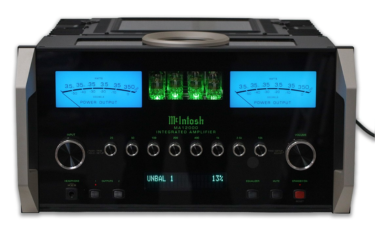
The MA12000 isn’t trying to be compact. It’s trying to eliminate the need for separates.
A tube preamp section feeds a 350-watt solid-state output stage. Fully balanced circuitry. Autoformers. A modular DAC platform. Enough inputs to anchor a serious analog + digital system.
In practice, it behaves like a McIntosh preamp and stereo amplifier sharing a single chassis, with the authority you’d expect from both.
Who it’s for:
- Power-hungry speakers
- Large rooms
- Listeners who want tube texture and solid-state grip
2. Michi X5 Series 2
Dual-mono thinking in one chassis.
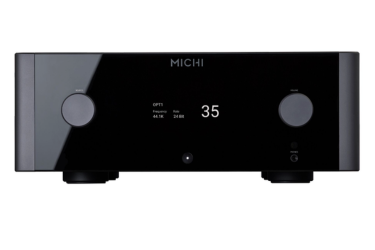
Michi (Rotel’s flagship line) builds around the power supply first. The X5 S2 delivers 600 watts into 4 ohms with a true dual-mono topology and massive toroidal transformers. That’s separates level engineering, without a doubt.
Add balanced inputs and a serious onboard DAC, and you have an integrated that can anchor a modern digital-first system without needing extra boxes.
Who it’s for:
- Current-hungry speakers
- Clean, modern system builds
- Listeners who want brute control without rack sprawl
3. Pass Labs INT-250
A power amp wearing an integrated badge.
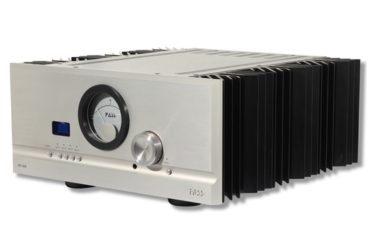
The Pass Labs INT-250 both looks and sounds like a standalone Pass power amplifier that just happens to have a preamp section built directly into the signal path.
Massive heat sinking. True current delivery. Fully balanced topology. No onboard DAC. No streaming module to cause questions a few years down the road. Just analog truth.
If you’ve spent time listening with speakers that love current or have demanding loads - Magnepan, ATC, low or high-impedance designs, you know current delivery matters more than spec-sheet wattage. The INT-250 behaves like real separates because, architecturally, it nearly is.
Who it’s for:
- Demanding speakers
- Analog-first systems
- Listeners who prioritize grip and control
4. Luxman L-590AXII
Pure Class A refinement.
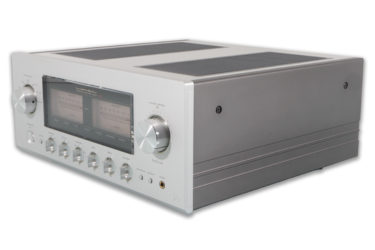
The L-590AXII is not an amp that wows you from the spec sheet with brute wattage. It’s built on a well-thought-out topology and execution.
Pure Class A operation. Overspecified power supply. Discrete circuitry. Parts selection you’d expect in high-end separates.
What blurs the line here isn’t raw output, it’s refinement. Noise floor. Tonal density. Micro-dynamic nuance.
In the right system, it carries the scale and refinement of separates throughout the listening experience. It just happens to be in one gorgeous chassis.
Who it’s for:
- Efficient speakers
- Smaller to mid-sized rooms
- Listeners who value texture and harmonic richness
5. ModWright Instruments KWH 225i
Tube dimensionality. Separates-level authority.
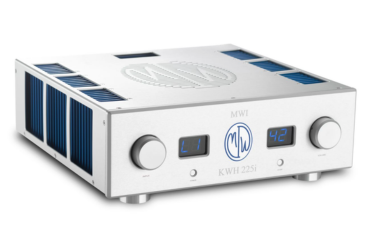
On paper, the 225i is a tube integrated rated at 225 watts per channel. That alone makes it unusual. But what really blurs the line is execution.
The power supply architecture, physical layout, and pre/output stage integration feel closer to a dedicated preamp + power amp pairing than a traditional tube integrated. There’s genuine current delivery. Real bass control. And dimensional layering that doesn’t collapse when the music gets complex.
It also offers modular flexibility (optional phono), allowing you to configure it as a modern hub or keep it purist and analog-focused.
In real systems (and I’ve lived with this one), it doesn’t behave like a convenience solution. It acts and certainly sounds like a statement piece that just happens to live in one incredibly solid box..
Who it’s for:
- Listeners who want tube depth without soft bass
- Moderately demanding speakers
- Systems where tone and scale both matter
6. Hegel H600
Streaming DAC + high-current amp done right.
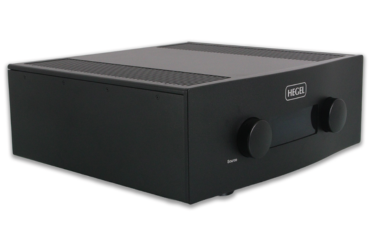
Hegel’s philosophy has always leaned toward minimal boxes, maximum performance. That classic Nordic look and feel come to life. Hegel has knocked it out of the park in recent years with designs like the H190 and H390, the H600 refines that idea.
High damping factor. Robust power supply. Network streaming built in. A DAC stage that, for many systems, eliminates the need for a standalone converter.
It doesn’t replace separates through brute size. It replaces them through intelligent system integration.
Who it’s for:
- Digital-first listeners
- Clean simplisitic systems (integrated + speakers)
- Those who want fewer cables without giving up control
When an Integrated Makes More Sense Than Separates
For many systems, especially real-world systems under $20K–$30K total, a well-executed integrated amplifier will bring incredible sound and some, well, we call them less considered benefits.
- Shorter signal paths
- Lower system noise
- Fewer interconnect variables
- Better value allocation toward speakers
Separates still make sense in some cases, if your space and budget allow. But its pushing to the extremes of those benefits that integrated amps already do well.
- Extreme power requirements
- Dedicated multi-box analog front ends
- Long-term modular upgrade paths
But the old assumption that serious systems require multiple chassis is increasingly outdated.
It’s Not About the Number of Boxes
Integrated and separates alike ultimately live or die based on their execution.
The best integrated amplifiers today are designed with the same engineering discipline that once defined standalone preamps and power amps, just without the extra shelf space.
If you’re building a system and debating the two paths, the real question isn’t how many boxes you want. It’s how well the one box is built.
Keep Exploring
- Integrated Amplifier vs. Separates: Which Should You Buy?
- Integrated Amplifiers That Punch Way Above Their Price
- ModWright KWH 225i Integrated Amplifier Review: Pure Sound, No Compromise
- Rotel Michi Buying Guide: Every Model in the Lineup Explained
Integrated Amplifiers That Compete with Separates
Today’s best integrated amplifiers deliver serious current, refined circuitry, and real-world flexibility — often rivaling multi-box systems. Explore new and Certified Pre-Owned options to find a one-chassis solution that doesn’t compromise on performance.
Shop Integrated Amplifiers