 Speak to a HiFi Guide • 1-888-326-7490 • Mon-Fri • 8am to 5pm MDT

Cambridge Audio CXA81 MKII Review and Overview
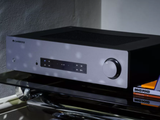
Cambridge Audio has been on a winning streak for years now, especially in the streaming world with the EXN100 and CXN100. But what often gets overlooked is that Cambridge also makes some of the best integrated amplifiers under $10k, without even coming close to that price bracket. The CXA81 MKII is a perfect example of why.
On paper, it looks like “just another 80-watt amplifier,” but I can assure you: it isn’t. I don't know if I would call it a giant killer, but the CXA81 MKII definitely screws up the bell curve for integrated amplifiers, charging double for maybe as good a sound, with lesser amenities.
Let's talk more about the CXA81 MKII.
What is the CXA81 MKII?
The CXA81 MKII is Cambridge Audio’s mid-tier integrated amplifier, designed as a true all-in-one hub for modern two-channel systems. Rated at 80 watts per channel and built around a refined Class A/B architecture, it sits in the sweet spot of Cambridge’s lineup, powerful enough to drive a wide range of speakers, yet compact and affordable enough for everyday listening rooms.
It includes an upgraded DAC inspired by the tuning of Cambridge’s CXN100 streamer, enabling the CXA81 MKII to function as both a traditional integrated amp and a digital control center. The goal here is simple: clean power, low coloration, and a musical, easy-to-live-with presentation.
This is the kind of amp designed for listeners who want proper hi-fi performance without drifting into multi-box systems or higher price brackets. It’s flexible, friendly, and purpose-built to live at the heart of a system. Musicality.
Real World Listening With the CXA81 MkII
One of my personal favorite speakers is Harbeth, and my friend and colleague, Ryan McFarlin, has just that setup. We love this part of the job at TMR; our team gets to take home some of the coolest gear on the planet, and the CXA81 MKII has definitely made the rounds. Let's see what Ryan has to say about the Cambridge amp.
What system did you drop the CXA81 MkII into?
I dropped the CXA81 MkII into my home office, running it as part of a nearfield desktop setup rather than a traditional living room system. I paired it with Harbeth P3ESR XD speakers, which are a great fit for that kind of listening environment.
Before the Cambridge, I was using a PS Audio Sprout 100, which I really liked for its size and detail. But after long workdays of listening, I found it could get a little fatiguing. I wanted something smoother, warmer, and more natural overall — that’s what led me to the CXA81 MkII.
What stood out first when you started listening — tonal balance, drive, control, or overall ease?
The first thing that stood out was the overall ease and tonal balance. Compared to the Sprout, the CXA81 MkII immediately sounded smoother and more relaxed, without losing clarity or detail. It felt like something I could listen to all day without getting tired.
I was definitely aware of the size difference at first — it’s a bigger piece than what I had been using — but once I started listening, the price-to-performance ratio and feature set made a lot of sense pretty quickly.
How would you describe the CXA81 MkII’s strengths in terms of dynamics, speaker control, soundstage, and musical flow?
It pairs really well with the Harbeths. They already sounded great, especially with jazz and more laid-back music like singer-songwriter recordings, but the Cambridge brought those strengths out even more than I expected.
One big improvement was headroom and control. The CXA81 MkII has enough power that I don’t feel like I’m pushing it, even when I want to turn things up. With the Sprout, I was getting close to its limits pretty quickly. With the Cambridge, everything feels more stable and confident.
It also filled out the lower mids and bass more than I anticipated. I actually had to go back and re-dial my subwoofer because there was more weight and presence coming from the amp itself. Overall, it improved the system’s flow and composure — the music just feels more complete.
Did anything surprise you — either compared to other integrated amps you’ve used or compared to what you expected going in?
A couple of things surprised me.
First, how good it sounded right out of the box. I expected some break-in time, and while it did open up a bit after around 40–50 hours, it was already really enjoyable from the start. I ran pink noise over a weekend, but even early on, it sounded solid and well put together.
The other surprise was the build quality and feel. The motorized volume control caught me off guard the first time I used the remote and saw the knob moving on its own. It’s a small thing, but it feels smooth and well executed. The buttons and controls all feel solid, and overall the amp feels more premium than I expected at this price.
Who do you think the CXA81 MkII is best suited for?
I think it’s a really flexible amplifier that works well in a lot of different systems. It’s probably not ideal for most desktop setups just because of its size — I make it work, but I’ve had to get a little creative with placement.
That said, I could easily see it in small to mid-sized rooms, paired with a wide range of speakers. It’s got plenty of power, a strong onboard DAC, and lots of input options, so it can anchor a system without feeling limiting.
If someone wants an integrated amp they can grow with — something that sounds musical, stays composed, and doesn’t feel like a compromise — it’s honestly hard to go wrong with the CXA81 MkII.
Pairing Recommendations
The CXA81 MKII is a flexible integrated amp that plays well with a wide variety of speaker designs. With 80 watts of Class A/B power and a balanced, slightly warm presentation, it’s easy to build a system around it.
Here are the speaker types that tend to shine with the CXA81 MKII, plus a few real-world examples.
Best Speaker Types for the CXA81 MKII
1. British Monitors (Warm, Natural, Neutral-Voiced)
This amp loves speakers with natural midrange and gentle top-end energy.
Perfect for: small to mid-sized rooms, vocal-heavy music, and intimate listening.
Examples:
- Harbeth (P3ESR, C7ES, etc.)
- Spendor A-Series
- Wharfedale Linton / Denton
2. Compact Towers & Efficient Bookshelf Speakers
These speakers make the most of the CXA81 MKII’s clean power and dynamic punch without requiring huge current.
Examples:
- Monitor Audio Silver Series
- KEF R3 / R5
- Bowers & Wilkins 600 or 700 Series
3. Flat-Panel Speakers (In the Right Room)
The CXA81 MKII can drive smaller Magnepan models well in small rooms, offering great tone and clarity — just not high-output listening.
Examples:
- Magnepan LRS+
- Magnepan .7 (Add note: larger rooms = choose more efficient speakers.)
General Pairing Guidance
- Room Size: Best in small to mid-sized rooms
- Impedance: 6–8 ohm speakers are the sweet spot
- Efficiency: Higher efficiency helps, but isn’t mandatory
- Character: Clean and detailed with a touch of warmth — doesn’t overly color your speakers
This flexibility makes the CXA81 MKII a standout choice for anyone building a system in the $2K–$5K speaker range, new or used.
Specs (The Ones That Actually Matter)
- Power Output: 80 watts per channel into 8 ohms
- Amplifier Class: Class A/B
- DAC: ESS Sabre-based DAC tuned from the CXN100 architecture
- Inputs: Digital (optical/coax), USB, RCA analog, balanced XLR
- Outputs: Pre-out for subwoofer or external amp
- Bluetooth: Yes, aptX HD
- Headphone Amp: Included
- Dimensions: Fits easily into small racks/media consoles
- Weight: Solid, but manageable for shelf placement
For more reading on Cambridge and amplification:
- Integrated Amplifiers That Punch Way Above Their Price
- EXN100 or CXN100: Choosing the Right Cambridge Audio Streamer
- Why Class AB Amps Still Rule the Real World: 7 Integrated Amps That Prove It
Ready to Hear What the CXA81 MKII Can Do?
Explore current availability, certified used options, and everything you need to make the CXA81 MKII the heart of your system.
Shop the CXA81 MKII