 Speak to a HiFi Guide • 1-888-326-7490 • Mon-Fri • 8am to 5pm MDT

5 Headphones That Actually Make Sense for Speaker Listeners

Headphone listening has become an increasingly significant aspect of Hi-Fi. For an entire generation of audiophiles, headphones served as their initial, and often sole, audio experience. As advancements in headphone amplifiers have progressed and manufacturers like Audeze offer models from entry-level to flagship, many traditional two-channel listeners are now exploring headphones as an additional way to engage with the hobby.
The math is enticing. By taking the room out of the equation, you can pair a flagship headphone from a brand like Audeze with a world-class amplifier for a fraction of what a "flagship" speaker and mono-block setup would cost.
If you’re used to listening on a well-built speaker system, headphones can feel… off. The scale isn’t the same. The soundstage collapses inward. The physicality of the music, the way bass moves air, the way a room fills with sound, just isn’t there in the same way.
And for a lot of audiophiles, that’s where the experiment ends.
But the right headphones are not trying to replace speakers. They offer a different kind of experience, one that can be just as resolving, just as engaging, and in some cases, even more revealing. All the while, taking the room out of the equation.
The key is finding headphones that don’t feel like a downgrade.
They need to scale with your system, present music with a sense of structure and space, and deliver dynamics in a way that still feels believable if you’re used to real hi-fi.
These five do exactly that.
1. Audeze LCD-5
Planar authority with real system-level scaling
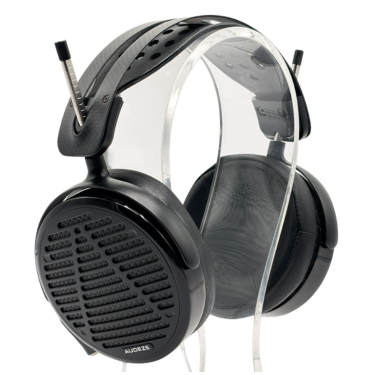
If what you love about speakers is weight, control, and effortlessness, the LCD-5 is one of the easiest transitions into headphones.
This is a planar design that doesn’t feel soft or overly relaxed. It’s fast, controlled, and extremely resolving, with bass that feels grounded rather than exaggerated.
What stands out most is how well they scale. Paired with a capable headphone amp, the LCD-5 behaves less like a “headphone” and more like a component in a system. They respond to upstream changes in a way that will feel familiar to anyone used to dialing in a speaker setup.
They don’t try to simulate a room. Instead, they presents a tightly focused, highly resolved window into the recording — one that rewards better sources and amplification just like a good pair of speakers would.
Although the LCD-5 has recently been updated to the 5s, the original LCD-5 remains widely accessible on the used market. Given their current pricing, these flagship headphones represent an exceptional value.
The New Evolution: LCD-5s. I am incredibly excited about the just-released LCD-5s. While I haven't spent time with them yet, they introduce Audeze’s new SLAM (Symmetric Linear Acoustic Modulator) technology.
Early reports suggest the LCD-5s takes the surgical precision of the original 5 and adds a layer of "physical" bass and a smoother upper-midrange. For the speaker listener who misses the way bass moves air in a room, the LCD-5s might be the final piece of the puzzle.
Amp Pairing & Power Needs
Amp Pairing & Power Needs While the original LCD-5 is 14 ohms, the new LCD-5s moves to 35 ohms. Both remain relatively efficient on paper, but they are "current-hungry." To get that system-level scale, pair them with a high-current solid-state amp or a robust tube setup to let that SLAM technology really breathe.
2. Abyss Diana MR
Speed, dynamics, and a different way of hearing space
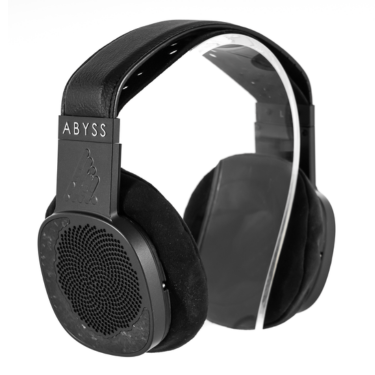
Abyss has never really followed the typical headphone playbook, and the Diana MR is a perfect example of that.
This is a headphone that prioritizes speed, dynamics, and immediacy. Transients hit hard. Microdetail comes through cleanly. There’s a sense of energy here that feels closer to a live system than most headphone designs.
What makes them interesting for speaker listeners is how they handle separation and layering.
Instead of trying to create an artificially wide stage, it presents music with structure and precision. Instruments feel distinct, and complex passages stay organized rather than blending together.
Like most high-end planars, they scale heavily with amplification. Give it a strong front end, and they become something far more serious than their driver size might suggest.
If you’re looking for something that feels alive and engaging — not just detailed — the Diana MR is worth serious consideration.
Amp Pairing & Power Needs
With an impedance around 30 ohms, the Diana MR looks easy to drive — but like most Abyss planars, they thrive on clean current. Give it a capable amp, and it delivers the authority and control it’s known for.
3. Meze Elite
A more relaxed, room-like presentation
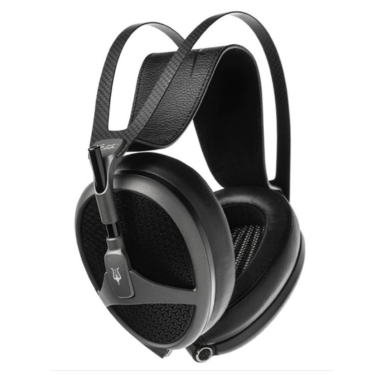
The Meze Elite approaches things differently.
Where some headphones lean into analysis or precision, just slamming you with detail, the Elite focuses on flow, texture, and long-term listenability. They are one of the few headphones that consistently feel easy to settle into for long listening sessions.
For speaker-listeners, the appeal lies in how it presents space. The stage feels open and natural, with a sense of air that helps music breathe. It doesn’t push detail forward aggressively, but it doesn’t hide it either.
Instead, everything feels integrated.
It’s also one of the more forgiving options on this list. While it still benefits from good amplification, it doesn’t demand extreme system matching to sound its best.
If your ideal system leans toward musicality over analysis, the Elite will feel immediately win you over.
Amp Pairing & Power Needs
At 32 ohms, the Elite is more forgiving than most planars. It runs well on a quality headphone amp, but still scales with better gear. One of the few here that doesn’t demand a full system to sound great.
4. Focal Utopia
Dynamics and immediacy that feel like speakers
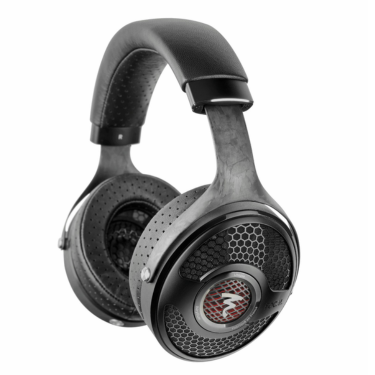
If you’re used to dynamic drivers in speakers, the Focal Utopia will likely feel very intuitive.
This is one of the most immediate-sounding headphones available. Notes start and stop with precision, transients have real snap, and the overall presentation feels fast and alive.
There’s a physicality to the way the Utopia delivers music that many speaker listeners appreciate. It doesn’t rely on warmth or added weight — instead, they deliver impact through speed and control.
Imaging is precise, and while the stage isn’t artificially wide, it feels organized and believable.
It’s also highly revealing of upstream gear. Pair it with a great DAC and amplifier, and it will show you exactly what they’re doing.
For listeners who value dynamics and energy, this is one of the closest headphone equivalents to a well-driven speaker system.
Amp Pairing & Power Needs
At 80 ohms, the Utopia is relatively easy to drive. It doesn’t need much power — just a clean, high-quality signal. The better your source and amp, the more it gives back.
5. Sennheiser HD 800S
The soundstage bridge for speaker listeners
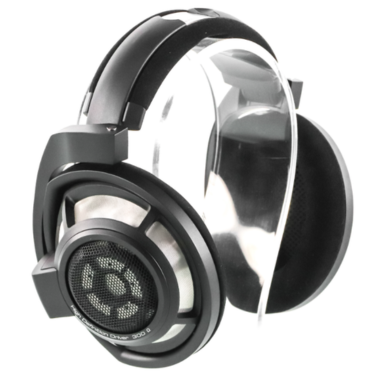
The HD 800S is probably the most reliable headphone for converting people who primarily listen to traditional speakers. It was my first "flagship" headphone, and I clearly remember spending countless hours completely captivated by its sound. The HD 800S showed me a level of potential in headphones I didn't know was possible, even though I was already very active in the Head-Fi community.
The reason is simple: space… I don't mean the space you save by using headphones instead of a two-channel system.
The HD 800S creates a presentation that feels open, expansive, and layered in a way that few headphones can match. They don’t replicate a room, but it gets closer than most.
Imaging is precise, and the sense of separation makes it easy to follow individual instruments within a mix.
For someone coming from speakers, this can feel immediately more familiar than a typical “in-your-head” headphone presentation.
That said, they lean toward a lighter tonal balance than some of the other options here. Pairing and system matching matter.
But when they are dialed in, the HD 800S offers one of the most speaker-like listening experiences available in a headphone.
Amp Pairing & Power Needs
At 300 ohms, the HD 800S needs more voltage than current. It pairs especially well with tube amps and quality desktop gear. When properly driven, it gains weight and control without losing its signature openness. I would advise having an amp with at least 1 watt available for these cans!
Why These Work (When Others Don’t)
A lot of headphones sound impressive at first.
Fewer hold up over time — especially if you’re used to a well-built speaker system.
What separates the headphones on this list is how they behave in a system:
- They scale with better gear.
- They maintain composure during complex music.
- They present structure, not just detail.
- Most importantly, they don’t feel like a step down.
They feel like a different way of listening that still respects what makes hi-fi engaging in the first place.
Final Thoughts
For speaker listeners, headphones can be a tough sell.
But they don’t have to be a compromise.
The right pair won’t replace your main system. What they’ll do is give you another way to experience your music. One that can be just as revealing, just as immersive, and sometimes even more personal.
Late-night listening. Smaller spaces. A second system that still feels serious.
That’s where headphones start to make a lot more sense.
Keep Exploring
- Not All Planars Are Created Equal - How Audeze Builds Headphones for Real Systems
- Audiophile Wireless Headphones – An Oxymoron?
Frequently Asked Questions About Headphones
Should I choose open-back or closed-back headphones?
Choosing the right headphones really depends on where and how you plan to listen.
If you're all about serious, critical listening at home, you can't beat open-back headphones. They're the gold standard because air moves freely through the earcups, giving you a much wider, more "holographic" soundstage—it feels like the music is happening all around you. The trade-off? They leak sound like crazy and won't isolate you from outside noise at all.
On the flip side, if you need to block out the world (or make sure your music doesn't bother anyone else), closed-back headphones are your best bet. While they tend to offer a more intimate presentation, they can deliver that truly impactful sub-bass "slam" that some people love.
Do high-end headphones really need a dedicated amplifier?
The short answer is yes, in most cases, a dedicated amplifier is highly recommended.
While many modern headphones are becoming easier to drive, flagship models—especially high-impedance dynamics (300+ ohms) or low-sensitivity Planar Magnetics—really require the voltage and current that only a dedicated amp can provide. Without proper power, you'll likely notice "thin" bass, a collapsed soundstage, and a lack of dynamic "grip" during complex musical passages.
So, if you're investing in high-end headphones, an amp is essential to hear them at their best!
What is the difference between Planar Magnetic and Dynamic drivers?
- Dynamic drivers (like those from Focal or Sennheiser) work like miniature speakers. They are beloved for their organic tonality, punchy "slam," and natural decay.
- Planar Magnetic headphones (Audeze, HiFiMAN, Meze) use a thin, flat diaphragm in a magnetic field. Its light weight allows for an instant reaction to the audio signal. This "speed" delivers amazing detail, clean bass, and quick, punchy transients.
Can I use high-end headphones with my smartphone or laptop?
While you can plug in directly, you're probably only experiencing about 60% of what those great headphones can do. The headphone jacks built into most devices use inexpensive, noisy chips that really struggle with high-resolution audio files. To truly unlock the "breakthrough" sound quality you invested in, you'll want to add a dedicated DAC/Amp. Honestly, even a small, portable "dongle" DAC will provide a massive jump in clarity compared to a standard laptop or phone jack.
Find the Perfect Pair for Your System
Whether you’re looking for the holographic soundstage of an open-back flagship or the intimate detail of a closed-back classic, the right headphones change how you experience your music. Explore our curated selection of high-performance personal audio to find your next breakthrough.
Shop All Headphones at TMR