 Speak to a HiFi Guide • 1-888-326-7490 • Mon-Fri • 8am to 5pm MST

3-D at My Desk: Vienna Acoustics Waltz Grand Bookshelf Speakers Review
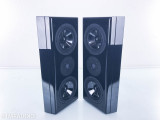
Vienna Acoustics Waltz Grand Bookshelf Speakers
It’s really amazing to me every time I do something that lowers the noise floor of my system and lets more of the music through.
I describe it precisely that way after years of experience with this. I’ve moved on from wondering what the heck it takes to get “the magic” going and realized that once the basics like frequency response and time domain are handled with room treatment and speaker placement, the job becomes about eliminating noise at all costs.
Choice in gear, choice in speakers, choice in cables, routing of cables, and, oh my goodness — conditioning or regenerating the power — all of these things serve to lower noise and remove distortions in a system. It’s in those distortions that the realism-robbing noise goblins wreak their havoc.
You may not notice the noise reduction tweaks on lesser recordings, but excellent productions show off that magic immediately.
With a great recording played on a great system, you press play and the sound doesn’t lurch from the speakers. They don’t grunt out the melody while drawing attention to themselves in the process.
Actually, if you’ve done it right, before the music starts, you wonder if the system is on at all.
When the music does start, the sound appears out of nowhere and instantly fills your listening space with a realistic representation of the performance hall's acoustics.
If you’ve really done well, with eyes closed, you’ll be damn sure you’re at the venue.
Great speakers do this because their driver integration and diffraction prevention are executed so well. Great speakers have high-quality ingredients and phase-careful crossover designers.
There are many elements to eliminating noise in a system, and I plan to discuss them in future blog posts. Today, we’re focusing on the role of speakers in reducing noise and distortion in a system.
The subject of the blog posts du jour is a pair of gorgeous Vienna Acoustics Waltz Grand speakers.
What are these things?! The cabinet shape is really unique, but because of it, I’m finding I like to try different placement orientations.
After some experimentation, I decided on a favorite position for them. I’m sitting at a rather large desk, and I have them on their sides, which has the baffles slightly leaning upwards. See the picture below.
And I’m blown away. The track begins, but in the first seconds of silence, I wonder if I actually hit “play.”
And then, the music appears from nowhere. It’s like I’m in a performance hall. I was expecting some negative interaction with the desk surface, but I’m hearing none.
Could these be the best desktop speakers ever created? I’m not kidding with this. Vienna Acoustics seems to have intended them for wall and corner mounting, but the sound I’m hearing doesn’t lie.
Mounted on the side of a desk, the sound has an enticing combination of a dipole’s sense of space and an electrostat’s sense of timing. Just a superb execution of a two-way by Vienna Acoustics’ design team, if you ask me.
Suppose your desk has the room (set up this way, the speakers are 19” wide by 7” deep by 7” tall), consider placing these on either side of your monitor. While I’ve no doubt they show up big in a bigger system, or could be fantastic as surround or center channel speakers, I may have just stumbled across the best use of their 3-D imaging talents.
At the time of this blog post, we have three pairs and a single speaker available, in two different finishes. Check ‘em out! Highly recommended.